Setting Up a Canadian Training Centre: CPR Instructor Packages and Equipment Essentials
A well run CPR and first aid training centre is equal parts pedagogy, logistics, and service. The curriculum matters, of course, but the outcomes you produce will depend on how reliable your equipment is, how efficiently you turn over classrooms, and how consistently you coach learners to competence. If you are opening or scaling a centre in Canada, a few uniquely Canadian factors shape your early decisions, from bilingual materials and domestic supply chains to differences among accrediting bodies. The details below come from the unglamorous side of the job, where timelines, spare parts, and room layouts can make or break an otherwise good program.
The Canadian landscape: accreditation and expectations
Most Canadian training centres align with one of three national programs: Canadian Red Cross, Heart and Stroke Foundation, or St. John Ambulance. Each has its own instructor pathway, course names, ratios, and equipment expectations, yet all are anchored to evidence informed guidelines from the International Liaison Committee on Resuscitation. Provincial occupational health and safety regulations set workplace training requirements, which is why an Ontario client may request Emergency First Aid or Standard First Aid aligned to Regulation 1101, while a British Columbia client may ask for Level 1 or 2 first aid that meets WorkSafeBC.
Before you purchase a crate of gear, decide which certifying body you will teach under. This choice affects your lesson flow, course durations, student to manikin ratios, and the checklists you will live by. It also affects the exact mix of CPR training manikins Canada suppliers can deliver to you in time for your first class.
Expectations have risen since the pandemic. Learners look for clean gear, clear decontamination routines, and realistic feedback. Many private sector clients want blended learning with shorter in person time, which means your face to face sessions must be efficient and hands on. That leans into equipment that sets up quickly, produces quantitative feedback, and tolerates frequent disinfection.
Budgeting with purpose, not guesswork
New centres often overspend on nice to have features and underspend on consumables and spares. Map budget to throughput. Start with a realistic forecast of learner volume per month, the course types you will offer, and the instructor pool available to teach them. If you plan two Standard First Aid classes per week with 12 learners each, plus one Basic Life Support session, you are looking at 120 to 160 learners per month after a ramp up period. That load translates directly into how many faceshields, lungs, AED training pads, and cleaning supplies you burn through.
For a stand up launch, a lean but solid gear package in Canada usually lands between 5,000 and 12,000 CAD before taxes. The low end assumes adult only CPR with basic feedback and a single classroom kit. The high end allows pediatric and infant stations, two to three rooms running concurrently, and modern feedback manikins. Instructor certification fees, insurance, shipping, and room outfitting add another 3,000 to 8,000 CAD depending on your city and whether you lease space or go mobile.
Choosing the right CPR instructor packages Canada
Most Canadian distributors sell CPR instructor packages Canada wide that bundle manikins, AED trainers, barriers, and a bag. Packages are convenient for a first buy, but look closely at what is inside. Some bundles inflate the count with items you will not use, like pocket masks that duplicate your BVM setups, while skimping on spare lungs or batteries.
When comparing packages, ask for:
- A clear list of included consumables, with counts per manikin and typical replacement intervals
- A warranty statement for manikins and AED training equipment Canada models, including where warranty service occurs in Canada
- Replacement part SKUs with Canadian prices, plus typical shipping times to your province
- Compatibility notes for feedback apps, especially iOS or Android version support
- The total weight and dimensions of packed kits if you plan to go mobile by car or transit
Those five checks prevent 80 percent of headaches in the first year. I have watched new centres wait three weeks for restock on infant lungs because they did not realize the bundle only had one set. Do not discover that on the morning of a pediatric class.
Manikins that fit your courses, rooms, and climate
For general public and workplace courses, lightweight torsos with washable faces are fine. If you teach Basic Life Support for healthcare providers, get manikins with chest recoil and ventilation compliance closer to clinical reality. Look for audible or visual feedback on depth and rate. The difference between manikins that only look like people and those that teach muscle memory shows up in your learners’ hands.
One practical tip for Canadian operations: winter transport. When you move gear at minus 15 Celsius, inexpensive plastics can stiffen or crack, and batteries discharge quickly. Choose manikins with durable polymers, and do not leave electronics in a cold vehicle overnight. Bring AED trainers and tablet devices indoors to prevent condensation when you set up in a warm room. The first course of the day runs smoother when gear is already at room temperature.
A typical classroom for 12 learners runs best with 4 adult manikins plus 1 infant per 3 to 4 learners if you teach pediatric content. That ratio allows round robin practice and sufficient rest to maintain compression quality. With debriefing and scenario rotations, you can keep time tight without queues forming at single stations.
If you plan to teach to francophone clients or in bilingual regions, confirm that your manikin feedback apps and AED trainer voice prompts have French options. Many do, but the settings are not always obvious.
AED training equipment Canada: realism that does not bite you later
Good training AEDs do a few things well. They let learners practice pad placement on adults and infants, follow voice prompts with clear timing, and simulate shock delivery without any hazard. The best devices mirror the interface of common public access AEDs in Canada, including bilingual prompts and metronomes.
Choose trainers that:
- Ship with both adult and pediatric pads, or have a pediatric switch that is obvious to learners
- Use replaceable pads with adhesive strong enough to survive multiple rotations before losing tack
- Have volume controls for noisy rooms and large group sessions
- Allow instructor control over scenarios, including no shock advised, battery low, and poor contact
- Include a protective case that tolerates road life without snapping latches
Real AEDs for demonstration are useful but optional in most beginner classes. If you do bring real units, set them to demo mode, remove batteries, and keep them physically separate from trainers to avoid confusion. Many client sites now own AEDs. Build time to practice with the client’s actual device during on site courses, because confidence rises fast when learners touch the unit they might use at work.
CPR and first aid training kits: what goes in the room every time
A solid classroom kit packs small but answers the common what ifs. At a minimum, plan for barriers and BVMs, slings, triangular bandages, roller gauze, SAM splints, non adherent dressings, EpiPen trainers, glucose gel simulators, and an anatomical airway model if you teach choking relief and adjunct placement. If you cover oxygen therapy or airway adjuncts under medical oversight, keep demo OPA and NPA sets, a training regulator, and a non functional cylinder marked for training only.
The trick with Emergency training equipment Canada distributors is to ensure your consumables match the case studies you teach. If your local employer clients are in construction, keep eye wash bottles and hemostatic gauze trainers to make scenarios believable. For childcare providers, invest in two to four high quality infant manikins with realistic chest rise and small diameter airways to teach gentle ventilations.
I keep one extra of every critical piece in the vehicle. One AED trainer goes down, or one manikin’s feedback board dies, and your day can unspool. A spare in the trunk turns a crisis into a minor speed bump.
Infection control you can maintain every week
Post pandemic, people notice decontamination. Publish your cleaning routine in the pre course email and post it in the room. Learners relax when they see a predictable process: hand hygiene, barriers on every breath, wipes between rotations, deeper clean at the end. Use manufacturer approved wipes for manikin faces and torsos to protect plastics and adhesives. Alcohol heavy wipes may cloud face shields over time, so rotate stock and expect to replace faces after 9 to 18 months depending on use.
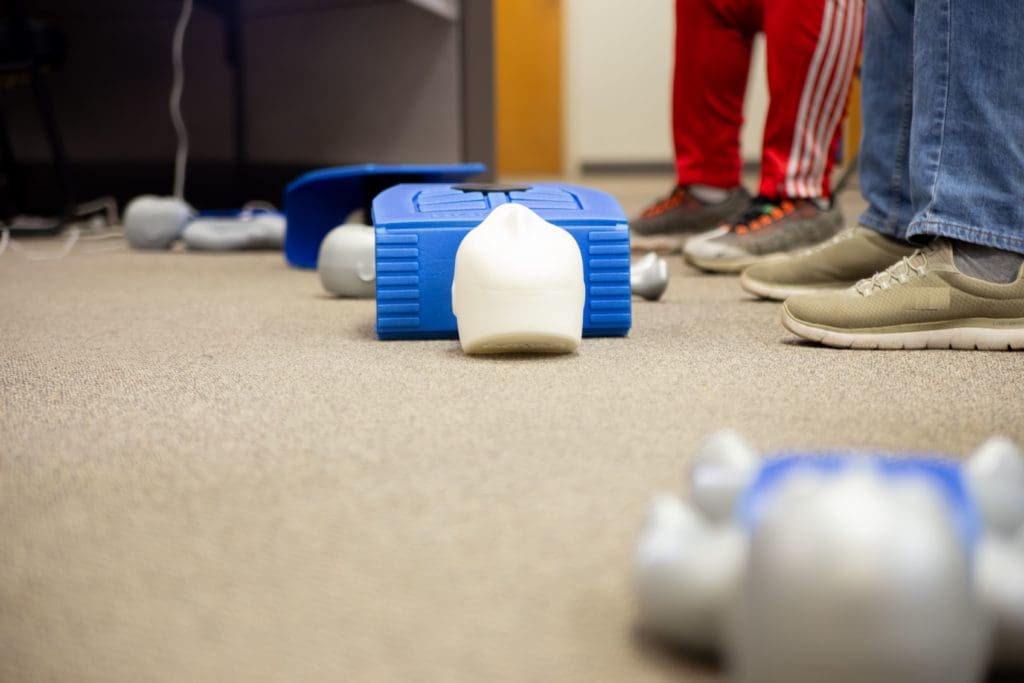
Disposable lungs are cheap insurance. Swap them between classes, not between students, to balance hygiene with ecology. If you run back to back sessions, keep a labeled bin for used components and a checklist for setup techs so nothing gets missed. A timer helps. Ten minutes of focused teardown and reset beats a rushed flip where someone forgets to empty manikin lungs and you discover pooled moisture next week.
Space, layouts, and mobile setups
A school gym with high ceilings feels luxurious, but most urban centres teach in compact rooms. For 12 learners, aim for at least 400 to 500 square feet. That gives you space for four practice stations, two scenario zones, and a corner table for AED trainers and first aid simulations. Keep your instructor kit on a rolling case, not a tote you carry, because your back will pay by week three.
If you go mobile, pack light and modular. One bag for adult CPR training manikins Canada sourced, one for infants and pediatric supplies, a compact AED trainer case, and a soft bag for bandaging and splints. Label everything, and use colour to code consumables. In winter, plan a staging routine that keeps wet boots away from electrical cords and devices. Simple floor mats do wonders.
Instructor development and quality assurance
No piece of gear compensates for an instructor who does not observe closely or fails to coach. Build a rhythm of micro assessments: quick depth checks, ventilation volume cues, pulse checks on manikins with integrated carotid bulbs, and timed cycles. Use video for train the trainer sessions, not in regular classes. Watching their own coaching style helps new instructors spot habits like jumping in too soon or talking over a learner’s thought process.
Quality assurance is a loop, not an audit day. Collect learner feedback every course with two to three specific prompts about equipment: Was the feedback clear, did you feel you improved, what felt confusing. Track results and pair them with maintenance issues. If multiple learners report the AED trainer voice was hard to hear, that is not a pedagogy problem, it is a volume knob or a tired speaker.
Inventory, maintenance, and the hidden cost of downtime
Every manikin and AED trainer should have a unique ID. Keep a shared spreadsheet or a simple inventory app that logs use hours, lung changes, pad sets remaining, and issues. Maintenance days keep you in business. Schedule a recurring block every two weeks to inspect, clean, test batteries, and reorder supplies. Open each case, power on every device, and run a short scenario.
Spare parts pay off. Keep at least one full set of adult and infant manikin lungs per class you plan to run that week, plus a 25 to 50 percent buffer. Stock extra AED trainer pads and at least one spare battery or charging cable per model. Canadian shipping is reliable, but weather and regional stockouts can stretch deliveries past a week, especially if you are outside major centres.
Sourcing in Canada: what to expect
Canadian suppliers of CPR training manikins, AED training equipment, and CPR and first aid training kits vary in lead times. Large distributors in Ontario and Quebec often ship in two to five business days to nearby provinces, while deliveries to Atlantic Canada or the Prairies can take a week. Northern communities see longer timelines. If you are west of Calgary or on Vancouver Island, check ferry cutoffs and Friday shipping windows.
Ask vendors about local repair options. Some brands have Canadian service centres, which shortens warranty turnarounds from months to days. If a brand requires returns to the United States or Europe, account for customs time and duties. Clarify batteries and power adapters. A few devices ship with international plugs by default. Get Canadian spec power supplies from the start.
Bilingual delivery, signage, and materials
In Quebec and many federal workplaces, bilingual delivery is not just nice to have. Verify that your course provider’s manuals, exams, and skill sheets are available in English and French, and that your AED trainers can switch prompts quickly. Label bins and cases bilingually. Small details, like French language choking relief posters at the front of the room, build trust and reduce distractions during practice.
Insurance, consent, and safe operations
Carry commercial general liability insurance that explicitly covers first aid and CPR instruction. Some landlords and client sites will ask for 2 million CAD; others want 5 million. If you teach on client premises, request proof of their AED model and first aid room layout before the session. Obtain consent for photos or videos used for instructor development, and keep learner records secure in accordance with PIPEDA and any provincial privacy laws.
You are teaching simulated emergencies. Manage risk with clear briefings and safe movement. Tape down cords, keep fluids in sealed bottles, and use dummy auto-injectors only. If you bring any oxygen training gear, label it training only and remove valves or regulators that could be mistaken for live units.
Digital backbone: registration, tracking, and certificates
Blended courses reduce in person hours, but they raise the bar on administration. Your registration system should automate pre course emails with directions, parking notes, health and safety info, and required attire. Certificate issuance should be fast, ideally same day, with robust verification links. Integrate your instructor scheduling and gear inventory so you do not book two classes with one set of infant manikins.
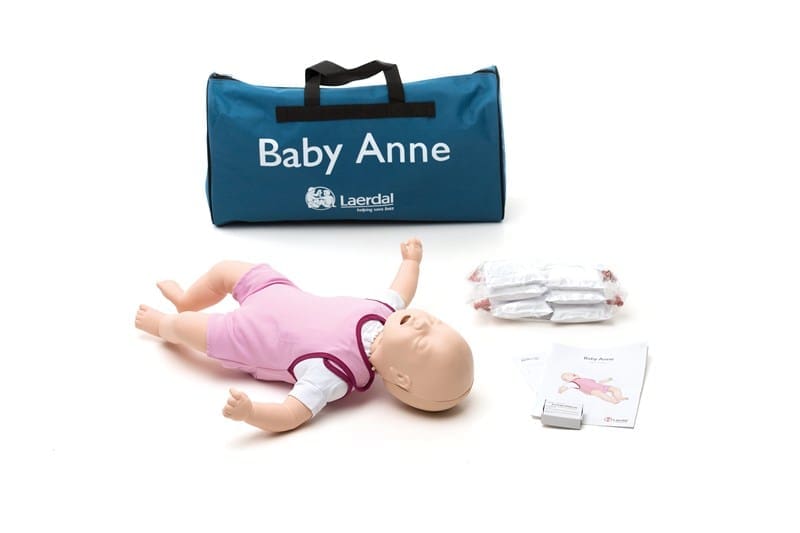
Use QR codes in the room for quick feedback forms. Keep them on laminated cards with a short URL for those who prefer to type. The more you close the loop between what learners experience and how you adjust, the stronger your program becomes.
Scenarios that feel like work, not theatre
Realism is not about fake blood all over the floor. It is about context. For a manufacturing client, set scenarios near machinery, with hearing protection on the table and a high noise AED trainer volume. In childcare, practice choking relief with real snack foods on display, and talk about high chair straps and car seats. In office training, run a scenario in a cramped boardroom with cables underfoot. The details change how people move, which changes what they remember a month later.
Use short cycles. Ninety seconds of focused practice, thirty seconds of coaching, rotate partners, repeat. People learn compressions in their forearms, not in their prefrontal cortex.
Three sample equipment builds that actually work
A compact starter kit for a solo instructor running public CPR and Emergency First Aid classes two days per week might sit around 5,500 to 6,500 CAD before tax. Expect four adult torsos with simple LED depth indicators, two infant manikins, one AED trainer with adult and pediatric pads, a bag of barriers and lungs for 10 classes, and a basic bandaging and splinting set. Add a rolling case and disinfecting supplies. You can set up and tear down in ten minutes, and you will feel the budget pressure on consumables by month three.
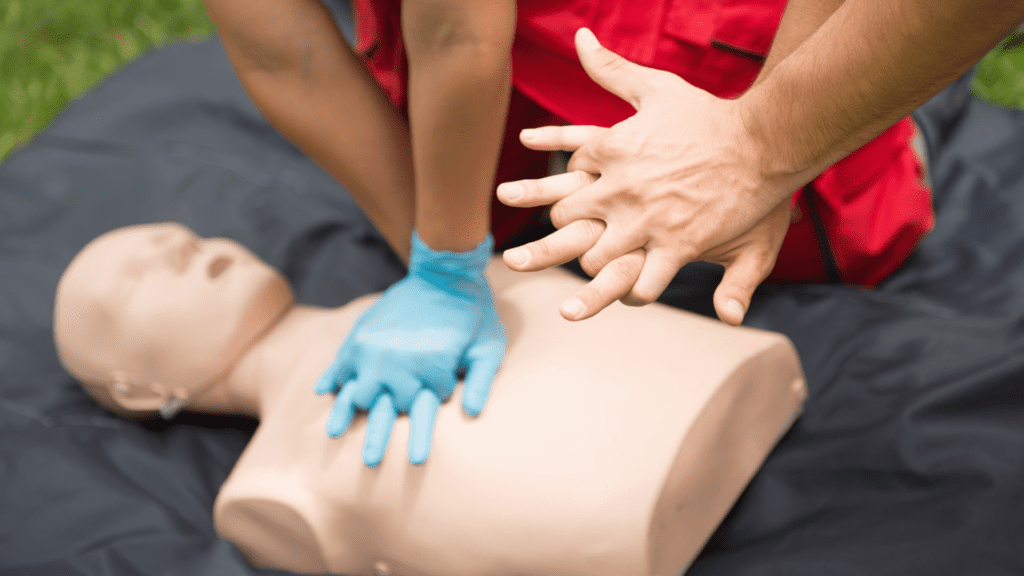
A midrange build for a small team running workplace Standard First Aid and BLS four to five days per week lands near 9,000 to 12,000 CAD. Step up to manikins with Bluetooth feedback apps, and increase to six adults and four infants. Add a second AED trainer, adult and pediatric, and a richer first aid kit with multiple SAM splints, pressure dressings, and a training oxygen kit. Buy extra batteries and a dedicated charging station. This set keeps two classrooms humming, or one larger group of 18 to 24 with minimal waiting.
A premium mobile build for corporate and healthcare clients may stretch to 15,000 to 20,000 CAD over time. That gets you high fidelity manikins with detailed recoil metrics, multiple AED trainers mirroring common Canadian public models, suction training heads, robust BVMs, and sturdy cases that survive airports and winter salt. You will not need all of it on day one, but as contracts grow, you will be glad you standardized early.
Common mistakes and how to avoid them
I have seen teams buy expensive feedback manikins, only to discover their instructor iPads are too old for the app. Check OS compatibility before purchasing. Others save money on off-brand trainer pads that do not adhere after two uses, leading to constant resets during class. Spending 10 to 15 dollars more per pad set can save an hour of frustration each https://cruzbcvg671.almoheet-travel.com/first-aid-supplies-online-in-canada-subscription-restock-vs-one-time-purchase week.
Underestimating shipping times is another trap, especially around holidays and during winter storms. Build a calendar buffer and reorder when you hit 50 percent of consumable stock, not 10 percent. Finally, do not ignore ergonomics. Teach hundreds of compressions a week without good flooring or knee pads, and your instructors will flare up with tendonitis by spring. Small mats or foam tiles are cheap protection.
A pre opening readiness checklist
- Confirm accrediting body alignment, instructor certifications, and course approvals for your province
- Validate equipment compatibility, including app versions, bilingual prompts, and replacement part availability in Canada
- Stock consumables for six to eight weeks, with documented reorder points and vendor contacts
- Prepare cleaning protocols with approved products and visible room signage
- Test run a full class with friends or staff, timing setup, rotations, and teardown
Metrics that tell you if the centre is healthy
- Average learner to manikin ratio and minutes of hands on practice per learner
- Equipment uptime percentage, and mean time to repair or replace critical items
- Reorder cycle time for consumables, and stockout incidents per quarter
- Post course ratings that specifically reference equipment usability and cleanliness
- Instructor strain indicators, like reported fatigue or injuries related to room setup
The long view: sustaining quality and trust
Equipment choices do not sit still. Feedback features improve, adhesives change, and batteries degrade. Set an annual review to retire or resell aging devices and standardize on models that your instructors know intimately. Keep one eye on evidence updates from your accrediting body, and be ready to adjust lesson flow and manikin feedback targets. And stay close to your suppliers. When you treat them as partners, they tend to find stock for you when everyone else is waiting.
Training centres earn their reputation in the small moments when a learner finally feels the right compression depth, or when a shy participant volunteers for a scenario because the room feels safe. The right mix of CPR training manikins Canada vendors can deliver, AED training equipment Canada clients recognize, and well thought out CPR and first aid training kits gives your instructors the tools to make those moments happen. From there, consistency carries you. Clean gear, tight logistics, and humble, alert teaching turn first time attendees into repeat clients who send their colleagues. The margin lives in those relationships, built one class at a time.
CPR Depot Canada — Business Info (NAP)
Name: CPR Depot CanadaAddress: 340 Croft Dr, Tecumseh, ON N8N 2L9
Phone: +1-877-570-7322
Website: https://cpr-depot.ca/
Email: [email protected]
Hours:
Monday: 9:00 AM – 6:00 PM
Tuesday: 9:00 AM – 6:00 PM
Wednesday: 9:00 AM – 6:00 PM
Thursday: 9:00 AM – 6:00 PM
Friday: 9:00 AM – 6:00 PM
Saturday: Closed
Sunday: Closed
Open-location code (Plus Code): 8537+C8 Tecumseh, Ontario
Map/listing URL: https://www.google.com/maps/place/CPR+Depot/@42.3036,-82.8392601,17z/data=!3m1!4b1!4m6!3m5!1s0x883b2aedd5f271a1:0xfee6f8b7ab8f4110!8m2!3d42.3036!4d-82.8366852!16s%2Fg%2F1q6cff15h
Embed iframe:
Socials:
https://www.facebook.com/people/CPR-Depot-Inc/61575911496200/ https://www.instagram.com/cprdepotinc/ https://www.youtube.com/@CPRDepot
https://cpr-depot.ca/
CPR Depot Canada is a supplier of medical training products and related supplies serving customers across Canada.
The business is listed at 340 Croft Dr, Tecumseh, ON N8N 2L9.
To contact CPR Depot Canada, email [email protected] or call +1-877-570-7322.
Hours listed are Monday–Friday 9:00 AM–6:00 PM, with Saturday and Sunday closed.
For directions and listing details, use: https://www.google.com/maps/place/CPR+Depot/@42.3036,-82.8392601,17z/data=!3m1!4b1!4m6!3m5!1s0x883b2aedd5f271a1:0xfee6f8b7ab8f4110!8m2!3d42.3036!4d-82.8366852!16s%2Fg%2F1q6cff15h
Popular Questions About CPR Depot Canada
Where is CPR Depot Canada located?CPR Depot Canada is listed at 340 Croft Dr, Tecumseh, ON N8N 2L9.
What are the hours for CPR Depot Canada?
Hours listed: Monday–Friday 9:00 AM–6:00 PM; Saturday and Sunday closed.
What does CPR Depot Canada sell or provide?
CPR Depot Canada supplies medical and first aid training products and related equipment (product availability varies).
Do they ship across Canada?
The business markets to Canadian customers and operates as a Canada-wide supplier; confirm shipping options at checkout or by contacting [email protected].
How can I contact CPR Depot Canada?
Phone: +1-877-570-7322
Email: [email protected]
Website: https://cpr-depot.ca/
Map: https://www.google.com/maps/place/CPR+Depot/@42.3036,-82.8392601,17z/data=!3m1!4b1!4m6!3m5!1s0x883b2aedd5f271a1:0xfee6f8b7ab8f4110!8m2!3d42.3036!4d-82.8366852!16s%2Fg%2F1q6cff15h
Landmarks Near Tecumseh, ON
1) Tecumseh Town Hall2) Lacasse Park
3) Lakewood Park
4) WFCU Centre (Windsor)
5) Devonshire Mall (Windsor)