First Aid Supplies Online Canada: Top Kits for Schools and Offices
Emergencies do not schedule themselves. A student slips on wet tile, an employee faints in a meeting, a custodian slices a hand on a utility blade. The first five minutes determine whether an incident stays minor or escalates. That is why well built first aid kits, paired with a few smart extras like an AED and oxygen, are not just a regulatory box to check. They are part of how a school or office runs with confidence.
After helping dozens of Canadian schools, libraries, manufacturing floors, and tech offices put their programs in place, I have learned two things. First, the right gear makes it easy for non-medical staff to act quickly. Second, the easiest programs to sustain are the ones that match your actual risks and headcount, not an idealized list. Buying first aid supplies online in Canada streamlines the process, provided you know what matters and what is just packaging.
What Canadian regulations actually require
Across Canada, workplace first aid requirements are set provincially, and schools typically follow a blend of education ministry policies and the same occupational standards applied to other workplaces. The details vary, but the pattern is consistent. Headcount, risk level, and distance to medical care determine the minimum kit contents, the number of trained first aiders, and whether additional equipment is recommended.
Canada has a national standard for workplace first aid kits, CSA Z1220-17, that many provinces reference directly or indirectly. If you stock kits built to this standard, you are on firm footing in most settings. In Ontario, the Workplace Safety and Insurance Board has Regulation 1101 with defined contents. British Columbia and Alberta tie requirements to risk categories and travel time to a hospital. Public and independent schools usually layer in their own policies, often requiring child-specific supplies like assorted adhesive bandages, ice packs, and medications storage protocols.
AEDs are not mandated by all jurisdictions, but they are increasingly common in both schools and offices. Health Canada licenses AED models, and they can be installed without a prescription. Oxygen is different. Medical oxygen is considered a drug in Canada and generally requires medical direction or a valid supply channel with training in its use. First aid oxygen supplies can be purchased through reputable vendors, but administrators should check provincial guidance and insurer expectations before deploying them.
If your organization has locations in more than one province, standardize at or above the strictest requirement and publish a short internal guideline. It avoids tedious exceptions.
Schools and offices face similar incidents, but not the same risks
When a high school loads a first aid cabinet, it prepares for everything from playground scrapes to gym class sprains and asthma flares. An office with open plan desks and a small warehouse corner sees paper cuts, coffee scalds, and the occasional laceration from box cutters. Both need gloves, bandages, antiseptic towelettes, triangular bandages, gauze, tape, and splints. Beyond that base, tailoring matters.
I once audited two neighboring facilities, a charter school and a call centre. They both had large green kits mounted near the entrance. The school kit included child-size CPR masks and paediatric bandages, extra instant cold packs for sports, and a spare inhaler spacer with cleaning instructions. The call centre kit had metal detectable bandage strips because the on-site café prepped sandwiches, burn dressings for the espresso machine, and a compact eyewash because the janitorial contractor stored citrus degreaser. The dollar values were similar. The difference was in the thoughtfulness.
The right partner for first aid supplies online in Canada will help you match contents to your incident history and environment. Look for vendors who ask questions rather than one-click upsell bundles. A good sign is an option to build a CSA Z1220 kit with add-ons for your specific use case.
What to prioritize in a school first aid kit
Kits marked for schools are often generic. It pays to check details. Instant cold packs should be small and plentiful, not two large bricks that take half the box. Adhesive bandages should have good adhesive, not the cheap film that curls in an hour. Alcohol-free antiseptic wipes are better for young skin. Stock burn gel in single-use packets rather than one big tube that gets messy.
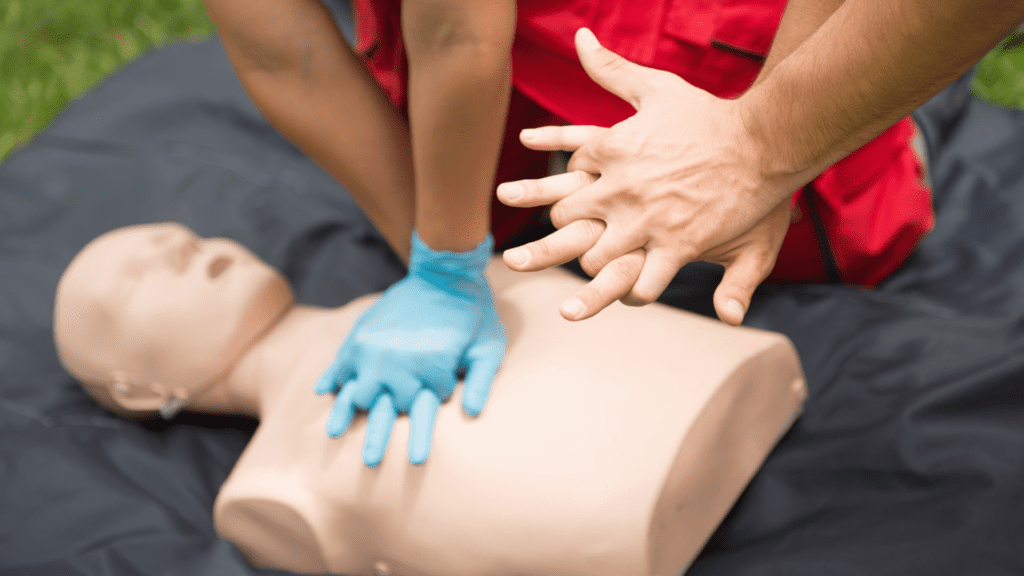
Child-specific considerations include sizes for nitrile gloves, small shears that will not scare a seven-year-old, and a paediatric CPR mask with a clear one-way valve. If your policy allows storing student medications, that is separate from the first aid kit. Do not co-mingle staff access medications with general first aid supplies. Keep an epinephrine auto-injector policy consistent with provincial guidance and your superintendent or principal’s direction.
Here is a concise, field-tested set of essentials that tends to perform well in elementary through secondary schools, sized for a student population of 200 to 600:
- Assorted adhesive bandages that actually stick, including fingertip and knuckle shapes, plus a small set of sensitive-skin strips
- Individually wrapped sterile gauze pads in multiple sizes, roller gauze, and cohesive wrap that tears by hand
- Alcohol-free antiseptic wipes, burn gel packets, instant cold packs, and a compact digital thermometer with probe covers
- Triangular bandages, splint roll, blunt-tip shears, tweezers with fine tips, and a paediatric CPR mask with one-way valve
- Nitrile gloves in two sizes, eye pads, saline eyewash ampoules, and a logbook with incident report forms
The list above covers everyday injuries and the predictable surprises at assemblies and practices. If you run a robust athletics program, add elastic wrap bandages, more instant cold packs, and larger wound dressings. For science labs, consider full eyewash stations and chemical burn supplies as directed by your safety officer.
Offices benefit from a different mix
An office does not need ten instant cold packs, but it does need more adhesive bandages and fingertip strips because keyboards and utility knives find skin. Coffee makers and steam wands increase minor burn risk. A small factory floor or warehouse corner in the same building changes the equation, calling for eye pads, more gauze, and possibly a tourniquet if you have cutting or crushing hazards and staff trained to use it.
Think of your office kit as two zones. The public access kit sits in the lunch room or by the main printer. It contains items staff can use without training and without privacy concerns. The second zone, often kept with a designated first aider or in a health and safety cabinet, holds advanced supplies like a pressure dressing, a trauma shear, and a tourniquet if your risk assessment supports it. Keep a copy of the SDS sheets for your chemicals nearby, even if those are just cleaners and printer toner.
If you host client events, stock a few extra CPR face shields, alcohol-free wipes, and motion sickness bags. You will be surprised how often those small touches save time and embarrassment.
Buying first aid supplies online in Canada without the guesswork
Online sourcing gives you selection and speed, but it also tempts you with glossy bundles that may skip critical items. Use a short checklist as you compare vendors. First, look for CSA Z1220 alignment and province-specific variants when needed. Second, confirm refill availability by SKU, not just as mystery multipacks. Third, check expiry dates and ask whether the supplier rotates stock quickly. A reputable shop will show expiry ranges and commit to reasonable shelf life upon delivery.
Shipping matters in emergencies, but it also matters for maintenance. Vendors that offer CPR supply delivery in Canada on a recurring schedule will save your coordinator time. Some provide automatic refill reminders based on consumption or incident logs. If you operate in multiple locations, consolidate your purchases so you are not juggling three versions of sterile gauze because different offices bought different brands.
I have had good results with suppliers who separate training equipment from live devices, so staff do not accidentally open an AED training electrode pack during a real event. If a product page clearly labels Defibtech AED training units in Canada versus live Defibtech pads and batteries, you avoid that headache.
AEDs belong in schools and offices, full stop
I have stood in hallways where a bystander started CPR within 60 seconds, and we still felt those seconds stretch. An AED on the wall, with a clear sign above it and staff who have seen it in action, tightens the chain of survival. The question is not whether to buy an AED, it is what to buy and how to support it.
For schools and offices, I look for units with simple voice prompts, bright graphics, and electrodes that fit both adults and children. Some brands require separate paediatric pads, others use a child key or a switch to drop energy. Choose the system your staff will find intuitive under stress. Popular models from ZOLL and Defibtech fit well in Canadian settings. If you already run ZOLL AEDs, stocking Zoll AED accessories in Canada is straightforward. You will want spare adult electrodes, paediatric or child capable options, a long-life battery, a wall cabinet with an alarm, and a rescue kit that includes a razor, scissors, gloves, and a CPR face shield.
For organizations that use Defibtech devices, Defibtech AED training units in Canada are widely available and mirror the look and feel of live units without delivering a shock. Training units protect your live device from wear and tear while giving staff realistic practice with pads placement and prompt timing.
A critical detail is program ownership. AEDs work best when someone is responsible for monthly checks, pad and battery expiry tracking, and regular drills. Mount the AED in a visible area, near a main corridor or lunchroom, not locked in a manager’s office. Pair the wall cabinet with signage that survives a fresh coat of paint and rearrangements.
Building a straightforward AED program for your office
A simple plan beats a complicated binder no one opens. Offices, especially multi-tenant ones, do well with a practical setup that survives turnover and renovations. The steps below have worked in both 30-person software startups and 500-person headquarters.
- Select an AED model that matches your training partner’s curriculum, order a wall cabinet and spare pads, and assign a primary and secondary custodian
- Install the unit in a central, plainly visible location with signage from multiple angles, then add the AED location to your floor plans and safety wardens’ maps
- Enroll at least two staff per floor in CPR and AED training, schedule refresher sessions at six to twelve month intervals, and run two short drills a year
- Set a monthly inspection reminder with a log sheet by the cabinet, check the status indicator, pad expiry dates, battery level, and cabinet alarm function
- After any incident or drill, restock the rescue kit, document learnings in a short debrief, and update onboarding material for new staff
There is nothing exotic in that list. The magic is in the calendar reminders and the visible placement. When the device sits where people gather, it becomes part of the mental map.
Where oxygen fits, and where it does not
First aid oxygen supplies in Canada occupy a gray area in many workplaces and schools. Oxygen can be lifesaving during a serious respiratory emergency, but it is not a cure-all, and its storage and use are regulated. If you are considering adding oxygen to your program, involve your medical advisor or engage a vendor who provides medical oversight and training. In many provinces, delivering oxygen in a first aid context requires a protocol and documented competency.
The practical questions are simple. Who will use it, and under what circumstances. How will you store cylinders safely, and how will you track hydrostatic test dates and regulator maintenance. Which mask types will you carry, non-rebreather or nasal cannula, and do you understand when each is indicated. For schools, extra caution is warranted given the student population and liability considerations.
Oxygen’s best fit is in environments where emergency response times may be longer, or where respiratory risks are higher. Examples include large campuses with field areas far from parking lots, facilities with respiratory hazards, or remote offices beyond typical urban response windows. Urban offices within a few minutes of EMS and schools with nurse coverage often do well focusing on CPR quality and AED readiness.
If you decide to carry oxygen, buy from a supplier who understands Canadian regulations, trains your designated staff, and supplies tamper-evident seals, regulators with clear flow markings, and masks packaged for single use. The same online vendors that handle workplace first aid often list oxygen kits, but the best ones will ask you about governance before taking your order.
Training, drills, and the human factor
Supplies are half the equation. Skills and confidence complete the picture. Canadian organizations generally use Red Cross, Heart and Stroke, or St. John Ambulance programs for CPR, AED, and emergency first aid. The best training partners will tailor scenarios to your setting, not just run through slides. In a school, that might mean a role-play in the gym with a student-sized manikin, a simulated playground fall, and a session on managing anxious siblings and parents. In an office, practice finding and fetching the AED from where it actually sits, not an imaginary point.
I have watched staff freeze during their first real emergency, even after training. The ones who recover fastest are those who have practiced in their own space. https://erickhgod861.trexgame.net/canada-s-must-have-emergency-training-equipment-for-remote-and-industrial-sites Short, two-minute drills help. Pick a date, announce a drill, and time how long it takes for someone to bring the AED to a conference room and start compressions on a manikin. Do not turn it into a gotcha game. Keep it educational and supportive. Record the time and celebrate improvements.
Do not neglect peripheral skills. For schools, teach how to use an inhaler with a spacer, how to recognize anaphylaxis, and where the epinephrine is stored. For offices, include scald and cut care, chemical splash response, and fainting management. It takes less than an hour a quarter to keep those muscles warm.
Stocking refills and managing expiry dates
The biggest frustration for coordinators is expired supplies. Adhesive bandages go quickly. Burn gel and antiseptics may sit until they expire. AED pads and batteries have long shelf lives, often two to five years, but still need tracking. Online suppliers that offer CPR supply delivery in Canada on a schedule can remove the cognitive load. You can set a quarterly or semiannual refill pack that includes the consumables your incident logs show you actually use.
If you want to keep it lean, assign one person per location to do a monthly spot check, guided by a simple form. Count instant cold packs, verify at least two sizes of gloves remain, check the condition of trauma shears and tweezers, and scan expiry dates on anything with an imprint. Stick a small label on the front of the cabinet with the next AED pad expiry date. That alone will save you from unpleasant surprises.
For multi-site organizations, establish standard SKUs. Decide which brand and size of bandage you will use, which type of gauze, and which AED model. That way, whether you buy refills in Vancouver or Halifax, you know exactly what is arriving. It also makes staff movement between offices smoother.
A note on quality, brands, and cost
Quality matters more than brand names, but brands can proxy for reliability. Nitrile gloves that tear, adhesive that peels in an hour, and flimsy shears will erode confidence. On the AED side, ZOLL and Defibtech have strong track records in Canadian deployments, with clear voice prompts and widely available accessories. If your sites already standardize on ZOLL, it is worth keeping that uniform, since Zoll AED accessories in Canada are easy to source and staff familiarity pays off. If training is your immediate need, Defibtech AED training units in Canada are straightforward to purchase and service, often at lower cost than cross-border imports.
Expect to spend a few hundred dollars for a solid CSA-compliant workplace kit and cabinet, more if you add trauma dressings and extra cold packs for a gym. AED packages with a wall cabinet, spare pads, and a rescue kit typically run into the low to mid four figures depending on model and features. Training unit packages cost less and pay for themselves in avoided wear on your live device.
Price shopping online is fine, but do not let a small savings push you to a supplier that cannot get refills to you quickly. Service and clarity beat a five percent discount when you are trying to replace expired pads before a school tournament.
Choosing a supplier that will still help you next year
The best partner acts less like a storefront and more like a quiet member of your safety committee. Ask three questions. Will they help you map kit types to CSA Z1220 and your province. Will they stock consistent refills and track lot numbers. Will they support training alignment, including sourcing Defibtech or ZOLL training accessories so your drills match your devices.
Check their shipping map. Many vendors can reach major Canadian cities within one to three days, but remote campuses need a plan for winter roads and holidays. If they offer CPR supply delivery in Canada as a subscription or a replenishment service, confirm you can pause or customize shipments. Your needs will change with staffing and layout.
Finally, make sure their invoices and SKUs are clear. Procurement departments love clean paperwork. You will love not having to translate “first aid bundle B” back into “we need more 4 by 4 gauze and cold packs.”
Bringing it all together for your site
A solid first aid setup is not complex. For a school, mount a CSA-compliant kit near the main office and another near the gym, add a visible AED with clear signage, tailor contents for child use and athletics, and schedule quarterly checks with short drills. For an office, place a public access kit by the lunchroom, keep a more advanced kit with your safety lead, mount an AED where everyone can see it, train at least two staff per floor, and log monthly inspections. If oxygen suits your risk profile and governance, add it with proper training and oversight.
Buy first aid supplies online in Canada from a vendor who gets the local standards and ships refills reliably. Standardize across locations, keep expiry dates visible, and practice in your own hallways. Layer in the right devices and accessories, like Zoll AED accessories in Canada for ZOLL fleets or Defibtech AED training units in Canada when you want realistic practice without risking live gear. If you keep the program practical, your staff will use it, your audits will go quickly, and those first five minutes will feel a lot more manageable.
CPR Depot Canada — Business Info (NAP)
Name: CPR Depot CanadaAddress: 340 Croft Dr, Tecumseh, ON N8N 2L9
Phone: +1-877-570-7322
Website: https://cpr-depot.ca/
Email: [email protected]
Hours:
Monday: 9:00 AM – 6:00 PM
Tuesday: 9:00 AM – 6:00 PM
Wednesday: 9:00 AM – 6:00 PM
Thursday: 9:00 AM – 6:00 PM
Friday: 9:00 AM – 6:00 PM
Saturday: Closed
Sunday: Closed
Open-location code (Plus Code): 8537+C8 Tecumseh, Ontario
Map/listing URL: https://www.google.com/maps/place/CPR+Depot/@42.3036,-82.8392601,17z/data=!3m1!4b1!4m6!3m5!1s0x883b2aedd5f271a1:0xfee6f8b7ab8f4110!8m2!3d42.3036!4d-82.8366852!16s%2Fg%2F1q6cff15h
Embed iframe:
Socials:
https://www.facebook.com/people/CPR-Depot-Inc/61575911496200/ https://www.instagram.com/cprdepotinc/ https://www.youtube.com/@CPRDepot
https://cpr-depot.ca/
CPR Depot Canada is a supplier of medical training products and related supplies serving customers across Canada.
The business is listed at 340 Croft Dr, Tecumseh, ON N8N 2L9.
To contact CPR Depot Canada, email [email protected] or call +1-877-570-7322.
Hours listed are Monday–Friday 9:00 AM–6:00 PM, with Saturday and Sunday closed.
For directions and listing details, use: https://www.google.com/maps/place/CPR+Depot/@42.3036,-82.8392601,17z/data=!3m1!4b1!4m6!3m5!1s0x883b2aedd5f271a1:0xfee6f8b7ab8f4110!8m2!3d42.3036!4d-82.8366852!16s%2Fg%2F1q6cff15h
Popular Questions About CPR Depot Canada
Where is CPR Depot Canada located?CPR Depot Canada is listed at 340 Croft Dr, Tecumseh, ON N8N 2L9.
What are the hours for CPR Depot Canada?
Hours listed: Monday–Friday 9:00 AM–6:00 PM; Saturday and Sunday closed.
What does CPR Depot Canada sell or provide?
CPR Depot Canada supplies medical and first aid training products and related equipment (product availability varies).
Do they ship across Canada?
The business markets to Canadian customers and operates as a Canada-wide supplier; confirm shipping options at checkout or by contacting [email protected].
How can I contact CPR Depot Canada?
Phone: +1-877-570-7322
Email: [email protected]
Website: https://cpr-depot.ca/
Map: https://www.google.com/maps/place/CPR+Depot/@42.3036,-82.8392601,17z/data=!3m1!4b1!4m6!3m5!1s0x883b2aedd5f271a1:0xfee6f8b7ab8f4110!8m2!3d42.3036!4d-82.8366852!16s%2Fg%2F1q6cff15h
Landmarks Near Tecumseh, ON
1) Tecumseh Town Hall2) Lacasse Park
3) Lakewood Park
4) WFCU Centre (Windsor)
5) Devonshire Mall (Windsor)